Women’s Entrepreneurship Takes a More Strategic Role in the UAE’s New Economy
Women entrepreneurs are becoming an increasingly important part of the UAE’s economic transformation, with government and business institutions placing greater emphasis on access to finance, markets, expertise and emerging industries.
The shift was highlighted during the UAE-Africa Women Leaders Conference, held in Abu Dhabi in May 2026. The Ministry of Economy and Tourism participated in a session focused on women and entrepreneurship, highlighting the UAE’s efforts to expand women’s participation in the new economy.
The figures demonstrate the scale of women’s contribution.
According to the ministry, women business owners in the UAE hold approximately 290,000 trade licences, representing more than 21% of active licences nationwide. Emirati businesswomen own or co-own nearly 44% of these licences, companies and enterprises across key economic sectors.
These numbers demonstrate that women’s entrepreneurship has moved well beyond a niche segment of the economy.
Women are establishing and managing businesses across professional services, retail, technology, healthcare, education, real estate, creative industries and other sectors. As the UAE continues developing its knowledge economy, their role is becoming increasingly connected to innovation and business growth.
The focus is now shifting from participation to scale.
Starting a business is only the first stage of entrepreneurship. Building a sustainable company requires access to capital, skilled employees, technology, customers and international markets. Women entrepreneurs therefore need ecosystems capable of supporting businesses throughout their growth journey.
The UAE is attempting to strengthen that ecosystem.
The Ministry of Economy and Tourism has highlighted initiatives such as Future 100, which supports businesses operating in sectors linked to the future economy. The ministry has also emphasised the importance of improving women’s access to financing, markets and specialised expertise.
A separate ministry roundtable in April 2026 focused on strengthening the UAE’s entrepreneurship ecosystem and identifying opportunities to help women-led startups expand into local and international markets.
The emphasis on internationalisation is particularly important.
The UAE’s location, infrastructure and business environment give women entrepreneurs an opportunity to build companies that operate beyond the domestic market. Businesses can use the country as a base for reaching customers and partners across the GCC, Africa and Asia.
This creates a different definition of women’s leadership.
An entrepreneur who builds a company is making decisions about investment, hiring, product development, market expansion and organisational culture. If the company grows, those decisions can influence employees, suppliers, investors and entire industry segments.
Entrepreneurship can therefore serve as a significant pathway into economic leadership.
The UAE’s growing attention to women-led businesses also aligns with its wider economic diversification strategy. As the country develops sectors such as artificial intelligence, advanced technology, sustainability, tourism and creative industries, new businesses will play an important role in creating future economic value.
Women entrepreneurs need to be part of that transition.
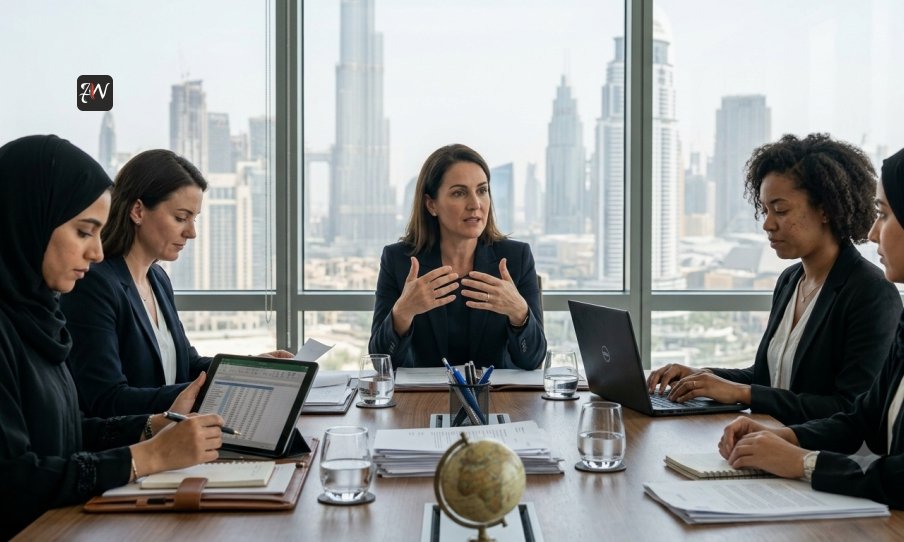
The increase in women serving on corporate boards also reinforces the broader picture. The Ministry of Economy and Tourism reported that the number of businesswomen serving on the boards of public joint-stock companies in Abu Dhabi and Dubai increased by more than 92.3% in recent years, reaching 148 women.
The movement from entrepreneurship to corporate governance demonstrates how women’s economic participation is expanding across multiple levels.
The challenge now is ensuring that women-led businesses can scale.
Access to capital, procurement opportunities, international partnerships, technology and experienced mentors will be critical. Without these elements, many promising businesses may remain small despite having the potential to grow.
The UAE has already created significant momentum around women’s entrepreneurship.
The next stage will be measured by the number of women-led companies that expand regionally, attract investment, create employment and become recognised players in the new economy.
For the UAE, empowering women entrepreneurs is no longer simply a matter of inclusion. It is increasingly part of the country’s broader strategy for building a diversified, competitive and globally connected economy.