UAE Continues to Lead the GCC in Women’s Boardroom Representation

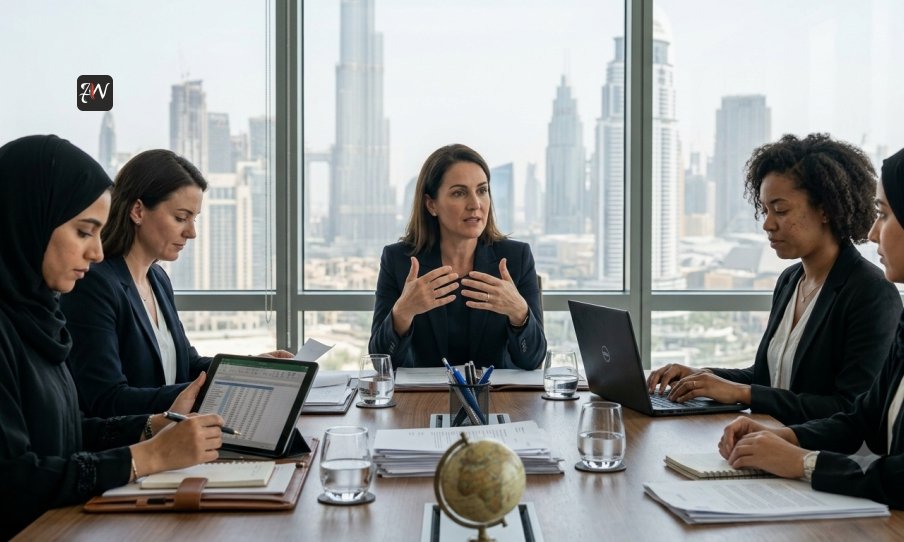
Women’s representation in Gulf corporate leadership is moving forward, with the UAE continuing to set the pace across the region. The latest GCC Board Gender Index 2026 shows that women now occupy 15% of board seats in UAE-listed companies, more than double the GCC-wide average of 7%. The report, produced by Heriot-Watt University Dubai and Aurora50, examined 759 publicly listed companies across the six GCC countries.
The numbers point to a gradual but meaningful transformation in the region’s corporate governance landscape. Across the GCC, 341 women currently hold 403 board positions, compared with 334 women occupying 390 seats in the previous year. While the overall increase remains modest, the direction of travel demonstrates that women’s participation at the highest levels of business is continuing to expand.
The UAE’s position is particularly notable. Women occupy 191 of the country’s 1,274 listed-company board seats, compared with only 3.5% in 2020. The country’s progress has been supported by regulatory measures and sustained institutional attention to gender balance. The UAE introduced requirements for listed companies to include women on their boards, creating a stronger structural pathway toward greater representation.
However, representation remains uneven across the GCC. Bahrain follows the UAE with 10.5% female board representation, while Oman records 7%, Kuwait 5.6%, Qatar 3.2% and Saudi Arabia 2.9%.
The figures also highlight an important issue beneath the boardroom numbers: the leadership pipeline. Women may be progressing into mid- and senior-management positions, but the transition into executive leadership and board roles still depends heavily on visibility, professional networks and sponsorship.
For Gulf businesses, the next stage is therefore not simply about increasing the number of women directors. It is about developing a sustainable pipeline of women with the strategic, financial and governance experience required to influence major corporate decisions.
The UAE’s progress demonstrates what can happen when policy, institutional commitment and corporate participation move in the same direction. The broader GCC now faces the opportunity to build on that momentum and ensure that women’s growing presence across the workforce translates into lasting influence at the highest levels of business.